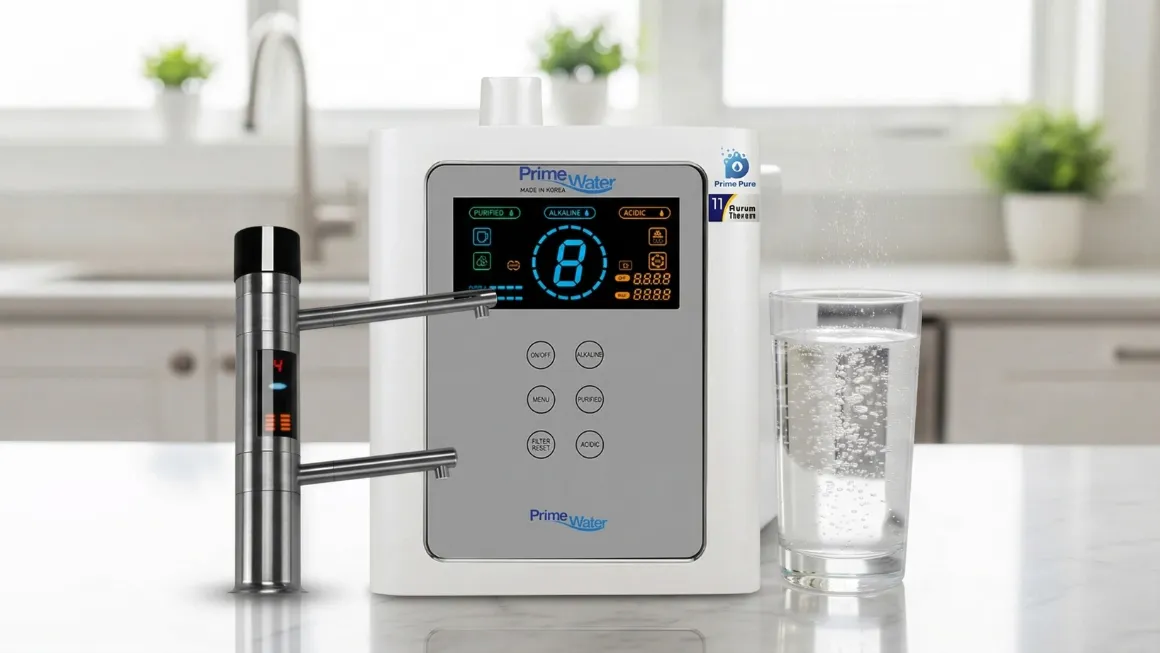
When shopping for an alkaline water ionizer in India, you'll encounter bold health claims — everything from "cures cancer" to "reverses aging." Most buyers don't know which claims are backed by science and which are marketing. This guide cuts through the noise using peer-reviewed research and gives you an honest, evidence-based answer.
Not All Alkaline Water Is the Same
Before evaluating any health claim, understand that "alkaline water" refers to two very different products:
Bottled alkaline water (₹30–₹150/litre) is regular water with minerals added to raise pH. It has no antioxidant potential and no dissolved hydrogen — the active properties of ionised water dissipate within 48–72 hours in a sealed bottle.
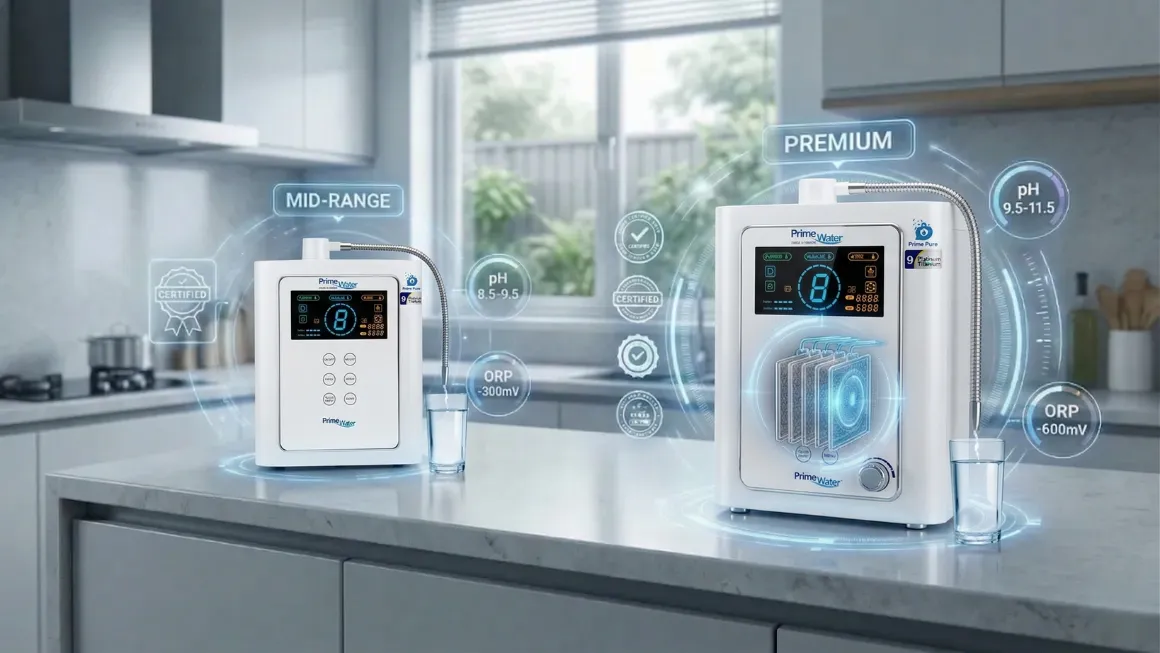
Ionised alkaline water from a home ioniser has three properties bottled water cannot replicate: negative ORP (antioxidant potential), dissolved molecular hydrogen (H₂), and a fresh, adjustable pH.
This distinction matters because almost all credible research on alkaline water benefits was conducted on ionised water — not on bottled. When bottled water brands cite ioniser research, that is a claim the science does not support.
What Research Actually Shows
Four areas have published evidence worth taking seriously. Here's the honest summary of each.
The foundational 2007 paper in Nature Medicine (Ohsawa et al.) demonstrated that molecular hydrogen selectively neutralises the most harmful reactive oxygen species — particularly the hydroxyl radical — without disrupting beneficial ROS needed for cellular function. A 2016 randomised trial in 100 adults found alkaline water reduced blood viscosity by 6.30% versus 3.36% for regular water after exercise (p = 0.03). Thicker blood puts more strain on the heart and slows oxygen delivery — a relevant finding for high-carbohydrate-diet populations.
A 2012 in-vitro study in the Annals of Otology, Rhinology & Laryngology found that pH 8.8 water permanently denatures pepsin — the enzyme responsible for tissue damage in reflux — while standard bottled waters at pH 6.9–7.1 had no effect. Limitation: this was a laboratory study, not a clinical trial. Alkaline water may be a useful complementary measure for laryngopharyngeal reflux, but it should not replace prescribed medication.
High-protein and refined-carbohydrate diets create an acid load that forces the body to draw calcium from bones as a buffer. A controlled study in Bone Journal (Wynn et al., 2009) found alkaline mineral water significantly reduced PTH (bone-calcium-release hormone) and S-CTX (bone resorption marker) compared to acid water — even when calcium intake was already sufficient.
The 2016 blood viscosity study also found improved bioimpedance hydration scores in the alkaline water group post-exercise. Most hydration-specific studies have small sample sizes. The most honest interpretation: ionised water tastes better, so most people drink more of it — and improved hydration volume alone produces many of the reported benefits.
Three Claims to Dismiss
These appear in marketing but are not supported by evidence — and in some cases contradict basic physiology:
Do Not Believe These
Why This Matters More in India
Research on alkaline water largely comes from Japan, South Korea, and the US. India's water situation is genuinely different — in ways that strengthen the case for quality ionisation.
Fluoride contamination: 370 Indian districts across 23 states have groundwater fluoride above the WHO safe limit of 1.5 mg/L. In Punjab's Malwa Belt, 49.7% of tested samples exceeded safe limits. A quality ioniser with pre-filtration removes fluoride at source — a direct, measurable health benefit for millions of families.
Tap water quality: Most city tap water in India contains chlorine, chloramines, and variable heavy metals. A water ioniser's pre-filtration stage removes these contaminants before ionisation begins — a quality improvement from Day 1.
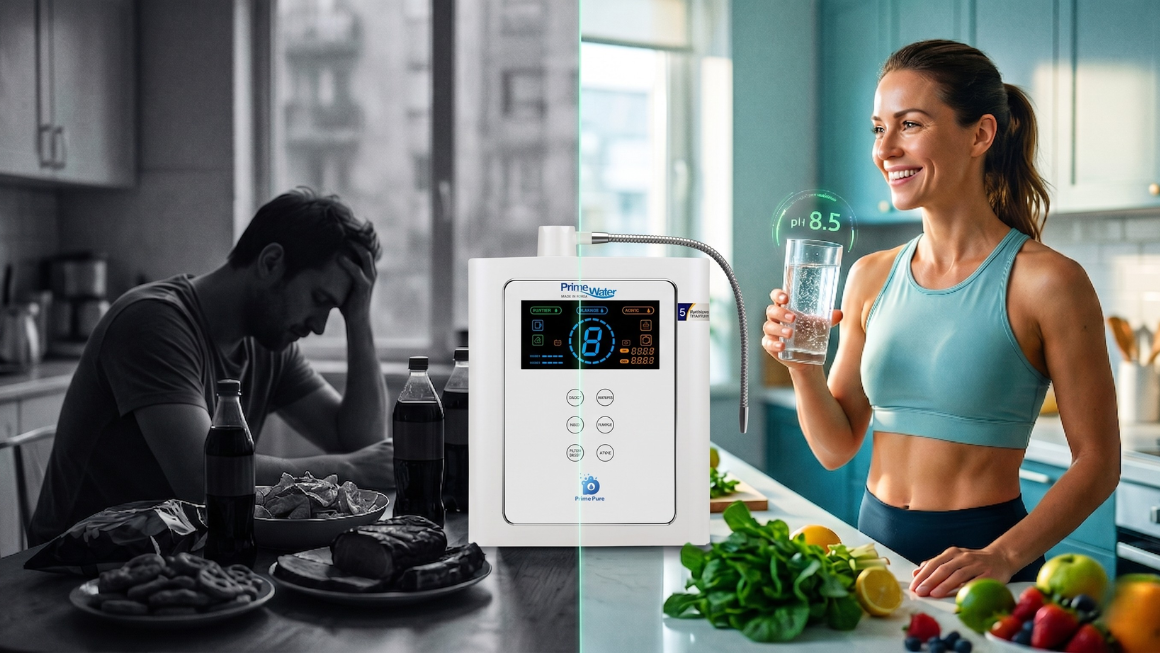
Dietary acid load: Indian diets high in refined carbohydrates and maida-based foods create significant dietary acid load — the same factor bone research links to calcium loss. Alkaline water offers a modest daily counterbalance.
Alkaline Water: Honest Comparison
| Feature | Regular Tap / RO | Bottled Alkaline | Ionised Alkaline (Fresh) |
|---|---|---|---|
| pH Range | 6.5 – 7.5 | 8.0 – 9.0 | 8.5 – 9.5 |
| ORP (Antioxidant) | +200 to +600 mV (oxidising) | Near neutral — no benefit | -300 to -600 mV (antioxidant) |
| Dissolved H₂ | None | None (lost in bottle) | 0.4 – 1.6 ppm (active) |
| Fluoride / Chlorine Removal | No | No | Yes (via pre-filter) |
| Research Basis | Baseline / control | Minimal | All major studies use this type |
| Cost Per Litre (Long-Term) | ₹0.5 – ₹2 | ₹30 – ₹150 | ₹2 – ₹5 (post-investment) |
What to Realistically Expect
✅ Expect This
- ✅Better-quality water — filtered, chlorine-free, fluoride-reduced from Day 1
- ✅Antioxidant potential — negative ORP and dissolved H₂ in fresh ionised water
- ✅Possible reflux relief — at pH 9+ for laryngopharyngeal reflux
- ✅Bone health support — reduced dietary acid burden over time
- ✅Better hydration — better taste leads most users to drink more
❌ Don't Expect This
- ❌Cancer cure/prevention — no evidence; never delay medical care
- ❌Blood pH changes — physiologically impossible
- ❌Overnight results — benefits build over weeks of consistent use
- ❌Same from bottled water — no active H₂, no negative ORP
- ❌Replace medical care — complementary only, not treatment
FAQ
Is alkaline water safe to drink every day?
Yes, for healthy adults. Long-term daily consumption has not been associated with adverse effects in published research. Exception: people with chronic kidney disease or those on regular prescription medications should consult a physician first.
What pH should I drink?
pH 8.5–9.0 for general daily hydration. pH 9.0–9.5 specifically for acid reflux, based on the pepsin-deactivation research. For children, pH 8.0–8.5 is appropriate. Do not drink above pH 10 regularly — ionisers produce this level for cleaning purposes.
Does alkaline water interact with medications?
Do not consume alkaline water within 30 minutes of taking oral medications. Higher-pH water can affect the dissolution and absorption rate of some drugs. Consult your prescribing physician if you take regular medications.
How is ionised alkaline water different from hydrogen water?
Functionally similar. Both contain dissolved molecular hydrogen (H₂) as the key active property. A quality ioniser produces 0.4–1.6 ppm H₂ along with alkalinity and negative ORP. For the combination of filtration, pH control, ORP, and H₂ — an ioniser is the most comprehensive option.
Can I verify the water quality before buying?
Yes. Purchase an ORP meter and pH pen (₹1,500–₹3,000 online) and test any demo unit yourself. At pH 9.0, a quality ioniser should read -300 to -600 mV ORP. Prime Water provides a free in-home demonstration so you can test with your own meter before committing.